
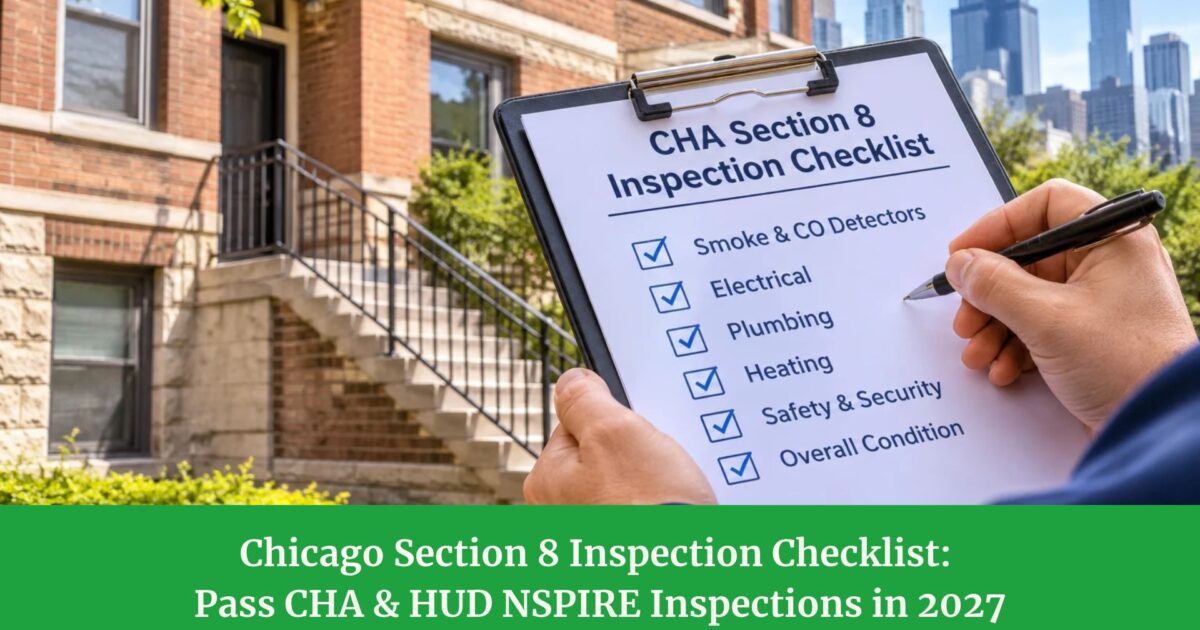
Owning a Section 8 rental property in Chicago can provide landlords with access to Housing Choice Voucher (HCV) tenants and a structured rental assistance program. However, before a property can receive approval for a new voucher tenancy—and throughout an existing tenancy—it must meet applicable housing quality and safety requirements.
This Chicago Section 8 Inspection Checklist helps landlords, real estate investors, and property owners prepare their rental units for Chicago Housing Authority (CHA) inspections. From electrical systems and plumbing to smoke detectors, windows, heating, and property security, understanding what inspectors look for can help you identify problems before an inspection appointment.
The Chicago Housing Authority evaluates assisted rental properties to ensure that they meet established health, safety, and housing quality requirements. A failed inspection can mean additional repairs, a reinspection, delayed occupancy, or potential interruption of housing assistance payments.
With HUD’s National Standards for the Physical Inspection of Real Estate (NSPIRE) transition approaching February 1, 2027, Chicago landlords should also understand the inspection changes already in effect and prepare their properties accordingly.
Whether you own a single-family rental, a two-flat, or a multi-unit investment property, this guide explains what to inspect, what commonly causes failures, and how to prepare your property.
Table of Contents
1. What Is a CHA Section 8 Inspection?
A CHA Section 8 inspection is an assessment conducted by the Chicago Housing Authority or its designated inspection contractor to determine whether a rental property meets applicable health, safety, and housing quality standards.
The inspection is part of the Housing Choice Voucher Program, a federal rental assistance program administered locally by public housing agencies.
Under this program, eligible tenants receive rental assistance, and participating landlords receive housing assistance payments under an executed Housing Assistance Payments (HAP) contract, subject to program requirements.
The purpose of an inspection is to verify that the property provides safe, sanitary, and functional living conditions.
CHA inspections may cover:
- Interior rooms and living spaces
- Kitchen and bathroom facilities
- Electrical systems and outlets
- Windows, doors, and security
- Heating and plumbing systems
- Smoke and carbon monoxide alarms
- Building exterior and structural conditions
- Common areas accessible to residents
- Potential health and safety hazards
A property must meet the applicable inspection requirements before CHA can approve it for an assisted tenancy.
2. What Are the Chicago Section 8 Inspection Requirements?
Chicago landlords participating in the Housing Choice Voucher Program must comply with applicable CHA inspection requirements and federal HUD housing quality standards.
CHA currently conducts different types of inspections depending on the property’s leasing and occupancy status.
Initial Inspections
An initial inspection takes place before a new voucher-assisted tenancy is approved for occupancy.
CHA schedules this inspection after the required Request for Tenancy Approval (RTA) paperwork is submitted, owner eligibility screening is completed, and the rent offer is accepted.
According to CHA’s current property-owner guidance, the owner generally has 14 days to correct deficiencies identified during an initial inspection and arrange a second inspection.
If the property fails the second inspection, the RTA may be denied.
Regular Inspections
Regular inspections verify that an occupied Section 8 property continues to meet applicable standards.
CHA generally conducts regular inspections at least once every two years for Housing Choice Voucher units.
However, annual inspections apply to certain properties, including units occupied by households with children under six and properties owned by landlords on CHA’s Do Not Lease List.
Complaint Inspections
A complaint inspection may be requested by either the tenant or property owner when there are concerns about the property’s condition.
For reported life-threatening deficiencies, CHA indicates that an inspection may be conducted within 24 hours. Other complaint inspections are generally conducted within 15 days.
Quality Control Inspections
CHA may randomly inspect properties that have recently passed an inspection to ensure that inspection standards are being consistently applied.
Understanding these inspection types helps landlords plan maintenance, coordinate access, and address repair requests before problems become more serious.
3. Chicago Section 8 Inspection Checklist: 15 Essential Checks
Use this Chicago Section 8 Inspection Checklist before your next CHA inspection appointment.
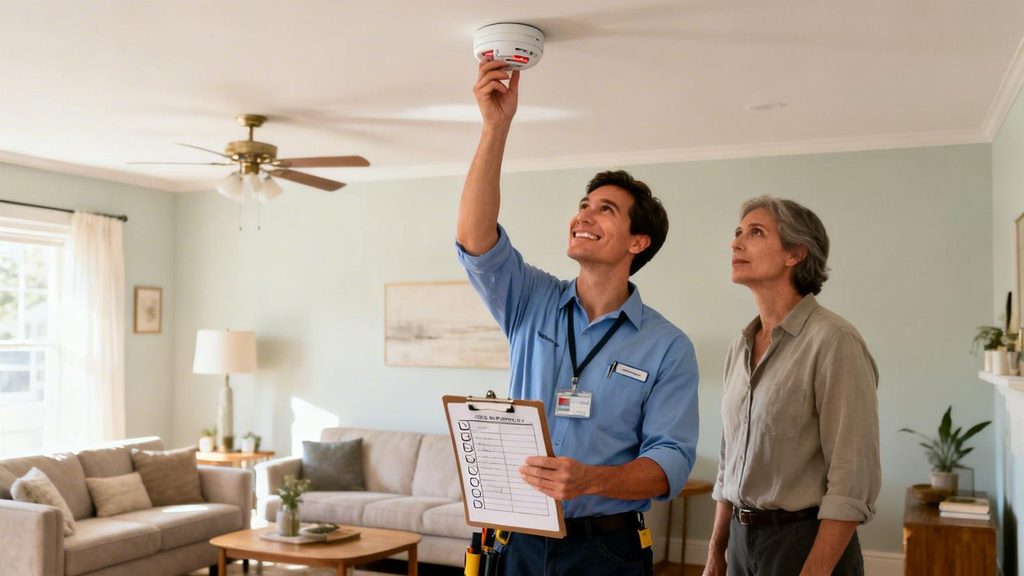
The following checks are practical preparation steps based on CHA’s published inspection guidance. They are not a substitute for the official inspection form or a guarantee of passing.
1. Smoke and Carbon Monoxide Detectors
Smoke and carbon monoxide alarms are important life-safety components.
Before the inspection:
- Confirm that required smoke alarms are installed in appropriate locations.
- Test each alarm to verify that it operates correctly.
- Check that carbon monoxide alarms are installed where required.
- Replace defective, missing, or expired devices.
- Ensure that alarms are properly mounted.
- Follow applicable hardwired or sealed 10-year battery requirements for smoke alarms.
Federal smoke and carbon monoxide requirements apply even when a housing authority has not completed its full transition to NSPIRE.
2. Electrical Outlets, Switches, and Wiring
Electrical hazards are among the common issues identified in CHA inspections.
Check the following:
- Electrical outlets are properly installed and functional.
- Light switches operate correctly.
- Light fixtures are secure and working.
- Outlet covers and switch plates are installed.
- Electrical junction boxes have appropriate covers.
- No exposed or damaged electrical wiring is present.
- Breaker panels have appropriate covers and no exposed openings.
- There are no obvious signs of overheating or electrical damage.
Have a qualified electrician evaluate and repair electrical hazards rather than attempting unsafe DIY repairs.
3. Windows and Window Locks
Windows should be functional, secure, and free from hazardous damage.
Inspect:
- Cracked or broken window glass.
- Windows that do not open or close properly.
- Missing or defective locks.
- Damaged window frames.
- Drafts caused by deteriorated seals or frames.
- Windows that present security concerns.
Repair damaged windows and ensure that occupants can operate and secure them properly.
4. Doors, Locks, and Property Security
Property security is another important inspection consideration.
Check:
- Exterior doors close and latch properly.
- Door locks work correctly.
- Entry doors are secure.
- Damaged door frames are repaired.
- Deadbolts and other required security hardware operate correctly.
- Accessible entrances and exits are not blocked.
Do not overlook basement entrances, rear doors, and shared building entrances.
5. Walls, Ceilings, and Floors
Interior surfaces should be in safe and serviceable condition.
Look for:
- Large holes in walls or ceilings.
- Water stains or evidence of active leaks.
- Loose or damaged ceiling materials.
- Uneven or hazardous flooring.
- Missing flooring sections.
- Sharp edges and protruding materials.
- Deteriorated paint.
Special attention is necessary for lead-based paint requirements in older housing.
For properties built before 1978, federal lead-safe housing requirements may apply, particularly where children under six reside or will reside.
Landlords should review applicable HUD lead-based paint rules and Illinois requirements before undertaking repairs that disturb painted surfaces.
6. Kitchen Appliances and Facilities
The kitchen should be functional and safe for everyday use.
Check:
- Stove or range is operational where required.
- Refrigerator is functional when owner-provided.
- Kitchen sink has working hot and cold water.
- Drainage works properly.
- Cabinets and food storage areas are in usable condition.
- Electrical outlets are safe.
- There are no active plumbing leaks.
- Kitchen ventilation is adequate where required.
Clarify responsibility for tenant-provided appliances and owner-provided appliances before the inspection.
7. Bathroom Fixtures and Plumbing
Bathrooms should have functioning fixtures and safe plumbing.
Inspect:
- Toilets flush correctly.
- Sinks drain properly.
- Hot and cold water are available.
- Bathtubs and showers are functional.
- Faucets do not leak.
- Drains are not blocked.
- No water is leaking beneath fixtures.
- Required ventilation is functional.
- Walls and floors around plumbing fixtures are in good condition.
Repair persistent leaks and investigate signs of moisture or water damage.
8. Heating Systems and Temperature
A functional heating system is essential for Chicago rental properties, especially during winter.
Before inspection:
- Test the furnace or heating system.
- Confirm that the system operates properly.
- Check that required heating equipment is safe.
- Inspect accessible vents and heating components.
- Ensure that required heating services are available.
- Check for visible damage around heating equipment.
- Arrange professional servicing if the system is malfunctioning.
Landlords should also inspect boiler systems, radiators, and water heaters where applicable.
9. Water Heater and Hot Water Supply
A property should have a functional hot water supply.
Check:
- Water heater operates properly.
- Hot water is available at required fixtures.
- There are no visible leaks.
- Pipes and connections are in safe condition.
- Required temperature and safety controls are functioning.
- There are no signs of corrosion or serious damage.
A licensed plumbing professional should address unsafe or defective equipment.
10. Plumbing, Water Supply, and Sewer Connections
Plumbing problems can affect both habitability and inspection results.
Inspect:
- Water supply is functioning.
- Drains are clear.
- Toilets and sinks do not leak.
- No sewage backup is present.
- Plumbing connections are secure.
- Exposed pipes are not damaged.
- Water intrusion is addressed.
- Sewer connections are functioning properly.
Investigate recurring drainage issues instead of relying on temporary fixes.
11. Roof, Gutters, and Building Exterior
CHA inspections can include exterior building conditions.
Inspect:
- Roof for visible damage or leaks.
- Gutters for blockage or damage.
- Exterior walls for holes or deterioration.
- Foundation for visible structural concerns.
- Exterior stairs and porches for safety.
- Railings for stability.
- Exterior electrical hazards.
- Areas around entrances for trip hazards.
Pay particular attention to exterior stairs, porches, and railings in older Chicago buildings.
12. Stairways, Hallways, and Common Areas
Shared spaces should be maintained in safe and accessible condition.
Check:
- Stairways are structurally sound.
- Handrails and guardrails are secure where required.
- Hallways are free of obstructions.
- Common-area lighting works.
- Exit paths are not blocked.
- Floors are free from dangerous damage.
- Shared entrances are secure.
For multi-unit properties, inspect common areas as carefully as individual apartments.
13. Pest Infestations and Sanitation
Evidence of pests can indicate a maintenance or sanitation problem.
Look for:
- Rodent activity.
- Cockroach or insect infestations.
- Droppings or nesting materials.
- Gaps that allow pests to enter.
- Accumulated trash or debris.
- Unsanitary conditions.
- Evidence of moisture that may attract pests.
Arrange appropriate pest-control services and address entry points.
14. Lead-Based Paint Hazards
Lead-based paint is particularly important for older Chicago properties.
For properties built before 1978, applicable federal lead-safe housing requirements must be considered.
Before inspection:
- Identify deteriorating paint.
- Check window frames and painted surfaces for peeling or chipping.
- Address damaged painted surfaces safely.
- Use qualified lead-safe professionals when required.
- Maintain relevant lead inspection and compliance documentation.
Do not dry-sand, scrape, or disturb potentially lead-containing paint without following applicable safety requirements.
15. General Health and Safety Hazards
Complete a final walkthrough of the entire property.
Look for:
- Exposed sharp objects.
- Broken glass.
- Unsafe electrical connections.
- Gas or fuel leaks.
- Blocked exits.
- Missing safety equipment.
- Structural hazards.
- Active water leaks.
- Unsafe heating equipment.
- Other conditions that could put occupants at risk.
Any suspected life-threatening hazard should be addressed immediately by qualified professionals.
4. Common Reasons Chicago Rental Properties Fail Inspections
Even well-maintained rental properties can fail a CHA inspection because of overlooked maintenance issues.
CHA publishes a list of common inspection failures on its property-owner inspection page.
Some of the recurring problems include:
| Common issue | What landlords should do |
|---|---|
| Missing or faulty smoke alarms | Install and test required alarms |
| Missing CO detectors | Install required carbon monoxide alarms |
| Exposed electrical wiring | Arrange qualified electrical repairs |
| Inoperable outlets or light fixtures | Repair defective electrical components |
| Broken windows | Repair damaged glass and window hardware |
| Faulty door locks | Restore proper door security |
| Peeling or deteriorated paint | Address applicable lead-safe requirements |
| Pest infestations | Arrange professional pest treatment |
| Damaged walls or ceilings | Repair holes and deteriorated surfaces |
| Heating or utility problems | Restore required services and repair equipment |
A useful approach is to conduct a room-by-room inspection rather than waiting until the official CHA appointment.
This allows owners to identify multiple small issues before they become reasons for a failed inspection.
5. What Happens If a Property Fails a CHA Inspection?
A failed inspection does not always mean that a landlord immediately loses rental assistance payments. The next steps depend on the inspection type, the nature of the deficiency, and the responsible party.
Generally, the process may include:
Step 1: Receive the inspection results
CHA identifies deficiencies and indicates whether the owner or tenant is responsible for addressing them.
Step 2: Review the required repairs
The landlord should review each reported issue and determine what work is needed.
Step 3: Complete the necessary repairs
Owner-responsible deficiencies must be corrected within the timeframe provided by CHA.
The CHA Inspection Guidebook states that owner-responsible deficiencies generally must be repaired within 30 days, while life-threatening deficiencies require action within 24 hours of notification.
Step 4: Arrange a reinspection
For certain failed regular, complaint, and quality-control inspections, CHA automatically schedules a reinspection.
CHA’s current property-owner guidance indicates a 30-day reinspection schedule for ordinary deficiencies and a 24-hour timeframe for life-threatening deficiencies.
Step 5: Address outstanding deficiencies
If owner-responsible deficiencies remain unresolved after the first reinspection, additional reinspection requirements and fees may apply. CHA currently identifies a $75 fee before scheduling a second reinspection in the applicable circumstances.
Can a failed Section 8 inspection affect rental payments?
Yes. Failure to correct owner-responsible deficiencies can result in adverse action, including abatement of Housing Assistance Payments (HAP) or termination of the HAP contract, depending on the circumstances and applicable program requirements.
This is why timely repairs and accurate inspection records are important for landlords.
6. How to Prepare for a Section 8 Inspection in Chicago
Following a consistent property maintenance routine can make inspection preparation easier.
Here are seven practical steps for Chicago landlords:
1. Schedule a pre-inspection walkthrough
Inspect the property before the official CHA appointment. Check each room, utility area, entrance, and common space.
2. Test all safety equipment
Check smoke alarms, carbon monoxide alarms, locks, and other required safety equipment.
3. Complete outstanding maintenance
Do not leave plumbing, electrical, heating, or structural repairs until the inspection date.
4. Coordinate with the tenant
Communicate the inspection appointment and coordinate access to all required areas.
5. Review previous inspection reports
If the property has previously failed an inspection, check the earlier report to ensure that all identified issues have been resolved.
6. Keep repair documentation
Maintain invoices, photographs, work orders, and inspection records. These documents help establish what work has been completed.
7. Confirm access to the entire property
Ensure that inspectors can access the unit, relevant utility systems, and applicable common areas.
For multi-unit owners, maintain a separate inspection and maintenance record for each unit.

7. What Is Changing Under HUD NSPIRE in 2027?
HUD’s National Standards for the Physical Inspection of Real Estate (NSPIRE) is designed to establish a more consistent approach to evaluating housing quality and safety.
The NSPIRE transition is particularly important for Chicago landlords participating in the Housing Choice Voucher Program.
As of November 2026, the federal compliance date for the full implementation of the applicable NSPIRE voucher-program requirements is February 1, 2027.
However, this does not mean landlords can ignore current inspection requirements until that date.
CHA confirms that several updated inspection standards have already been in place since April 1, 2026, including standards concerning:
- Smoke and carbon monoxide detectors.
- Bathtub and shower components.
- Wall conditions.
- Property security.
HUD also confirms that smoke and carbon monoxide alarm requirements remain applicable during the transition period.
Chicago landlords should therefore:
- Review current CHA inspection guidance.
- Become familiar with HUD’s NSPIRE standards.
- Maintain functioning smoke and carbon monoxide alarms.
- Correct existing safety and maintenance issues.
- Monitor CHA announcements for further implementation updates.
The applicable inspection standards and procedures should always be confirmed with CHA. The transition date does not automatically replace every current local inspection procedure.
8. Frequently Asked Questions About Chicago Section 8 Inspections
How often does CHA inspect Section 8 properties in Chicago?
CHA generally conducts regular Housing Choice Voucher inspections every two years. Certain properties, including units occupied by households with children under six and properties on the Do Not Lease List, are subject to annual inspections.
What is the most common reason for failing a CHA inspection?
CHA identifies several recurring issues, including faulty electrical fixtures, missing or incorrectly mounted smoke and carbon monoxide detectors, broken windows, faulty door locks, exposed wiring, deteriorated paint, pest infestations, and damaged interior surfaces.
How long does a landlord have to fix failed inspection items?
The repair deadline depends on the inspection type and the severity of the deficiency. CHA’s published guidance identifies a 30-day repair period for applicable owner-responsible deficiencies after certain inspections and a 24-hour response for life-threatening deficiencies. Initial inspection deficiencies generally have a 14-day correction period.
Always follow the specific deadline stated in your inspection notice.
What happens if a Section 8 property fails its initial inspection?
The landlord must correct the identified deficiencies within the applicable timeframe and arrange the required second inspection. CHA indicates that if the property fails the second initial inspection, the RTA may be denied.
Does NSPIRE apply to Chicago Section 8 landlords in 2026?
HUD has established February 1, 2027, as the compliance date for full implementation of the applicable NSPIRE voucher-program requirements. However, certain updated requirements are already in effect, and CHA has identified standards implemented locally as of April 1, 2026.
Do landlords need smoke and carbon monoxide detectors?
Yes. Applicable federal and local smoke and carbon monoxide alarm requirements must be followed. HUD’s current guidance requires compliant smoke alarms, including hardwired or sealed 10-year battery devices under the applicable federal requirements. Carbon monoxide alarms must also meet applicable requirements.
Can a landlord request a CHA inspection?
Yes. CHA allows property owners to request complaint inspections when appropriate. Owners should contact the CHA Inspections Department for assistance and scheduling information.
Can a property management company handle CHA inspections?
Yes. A property management company experienced in Section 8 housing can coordinate inspection scheduling, review inspection reports, arrange maintenance, communicate with tenants, and track outstanding repairs.
Choosing a company familiar with CHA and HUD requirements can help owners manage the inspection process more efficiently.
9. Make Section 8 Property Management Easier With Kettle & Oak
Managing a Section 8 rental property in Chicago involves more than collecting rent. Owners must coordinate tenants, maintenance, inspections, paperwork, housing authority requirements, and ongoing property compliance.
Kettle & Oak specializes in Chicago property management, including CHA, Section 8, Housing Choice Voucher, and affordable housing properties.
Our team supports property owners with:
- CHA and HUD inspection coordination.
- Section 8 paperwork and RTA submissions.
- Tenant placement and leasing.
- Maintenance and repair coordination.
- Inspection preparation and follow-up.
- Rent collection and owner reporting.
- Ongoing property management.
We work with Chicago property owners, including investors who live outside Illinois and need reliable local management for their rental portfolios.
If you own a Section 8 rental property in Chicago and want help managing inspections, maintenance, and day-to-day operations, speak with our team.
Let Kettle & Oak help you manage your Chicago rental property with greater confidence.
Contact Kettle & Oak to discuss your property management needs.
Call: 630-296-9660
Email: hello@kettleandoak.com
Website: https://kettleandoak.com/
Important Disclaimer
This article is intended for general educational and informational purposes. It is not legal advice, an official CHA inspection checklist, or a guarantee that a property will pass inspection. Inspection requirements may change, and individual properties may be subject to additional requirements. Always consult the latest Chicago Housing Authority guidance, applicable HUD regulations, and qualified professionals when evaluating compliance.
